
新闻中心
News Center
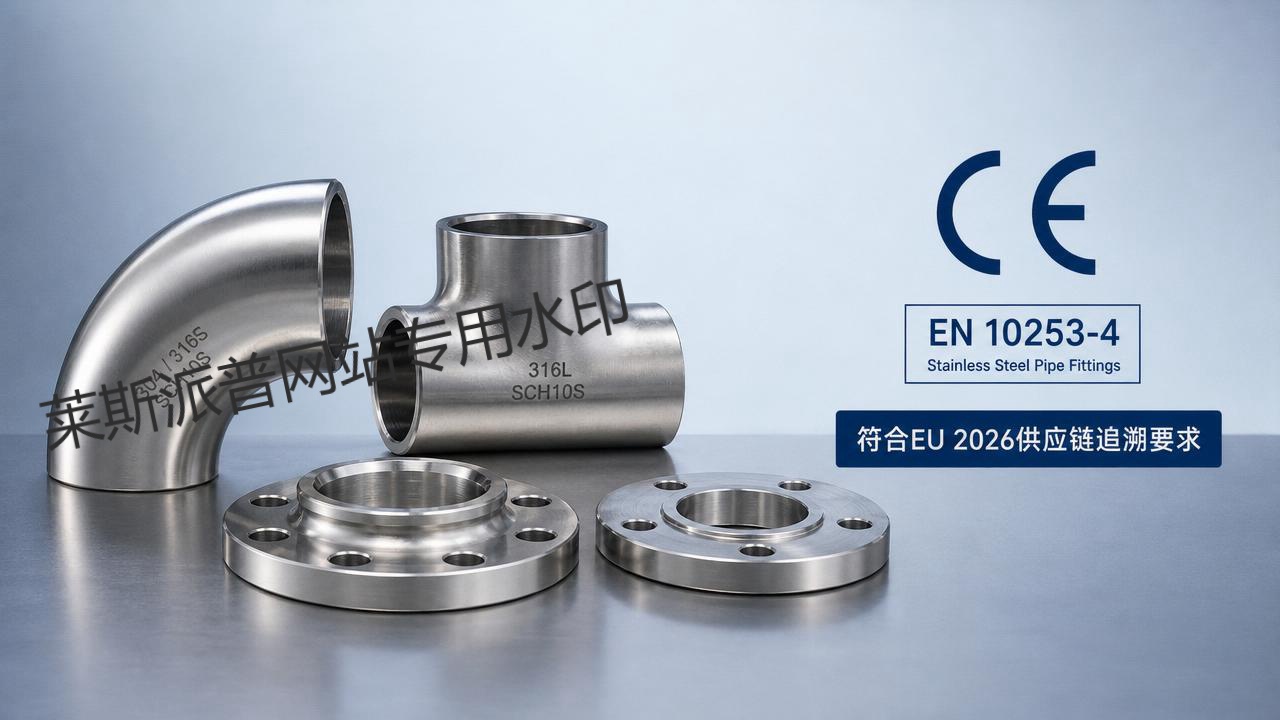
The European Union’s Internal Market Emergency and Resilience Act entered into force on May 29, 2026, introducing binding supply chain transparency requirements for industrial goods—including pipe fittings—exported to the EU. This regulatory shift directly affects manufacturers and exporters based in China, reshaping pre-shipment documentation, certification alignment, and delivery planning.
Factual Overview of the New Regulatory Framework
The Internal Market Emergency and Resilience Act became effective on May 29, 2026. It significantly expands the European Commission’s authority to monitor and intervene in the supply chains of imported industrial products. Under the law, pipe fittings and other industrial manufactured goods must demonstrate full traceability across raw material sourcing, production processes, and third-party compliance verification. The regulation applies at the point of EU customs clearance and imposes enforceable obligations on exporters prior to shipment.
Impact Across Supply Chain Roles
Direct Exporters
Exporters handling end-to-end shipments to EU customers now face mandatory pre-clearance submission of auditable supply chain records. Non-compliance may result in customs delays or rejection of consignments—directly affecting order fulfillment reliability and contractual penalties.
Raw Material Suppliers
Suppliers providing base metals, alloys, or coatings must ensure their documentation meets EU traceability expectations—including origin declarations, mill test reports, and environmental compliance attestations. Their data must be integrated into the exporter’s consolidated compliance dossier.
Manufacturers and Fabricators
Production facilities must maintain verifiable process logs (e.g., heat treatment records, non-destructive testing reports) and retain evidence of subcontractor oversight. Internal quality management systems must support real-time audit readiness—not just annual certification.
Supply Chain Service Providers
Logistics coordinators, customs brokers, and compliance consultants must now verify document completeness before release—not merely process paperwork. Their role evolves toward proactive validation of upstream data integrity.
Key Compliance Priorities for Exporters
Strengthen Certification and Documentation Alignment
CE marking remains necessary but insufficient. Exporters must now supplement CE with supplier-level declarations of conformity, material traceability matrices, and third-party verification reports aligned with EN standards and EU due diligence expectations.
Upgrade Raw Material Sourcing Controls
Procurement protocols must include mandatory upstream traceability clauses—requiring suppliers to provide batch-specific origin documentation, chemical composition certificates, and conflict-mineral disclosures where applicable.
Reconfigure Delivery and Order Planning Cycles
Extended pre-shipment verification adds lead time. Exporters should adjust internal timelines to accommodate minimum 5–7 business days for dossier review, third-party validation, and customs pre-notification—especially for first-time submissions.
Implement Supplier Qualification and Monitoring
A formalized supplier risk assessment framework—covering geographic exposure, audit history, and documentation capability—is now essential. High-risk suppliers require periodic verification, not just initial onboarding checks.
Industry Perspective: Beyond Compliance Toward Systemic Resilience
Analysis shows this regulation reflects a broader strategic pivot: the EU is shifting from product-level conformity to systemic supply chain assurance. From an industry perspective, it is more appropriate to understand this as a structural recalibration—not merely a new checklist. What deserves closer attention is how rapidly procurement specifications are evolving: EU buyers increasingly reference traceability requirements in tender documents, even before full implementation guidance is published. Observably, compliance is becoming a prerequisite for bid eligibility—not just post-award verification. Manufacturers that treat documentation as operational infrastructure—not administrative overhead—will gain competitive advantage in responsiveness and audit resilience.
Strategic Implications for Global Pipe Fittings Trade
This regulation marks a definitive step toward harmonized, evidence-based supply chain governance in industrial trade. Its significance lies less in immediate enforcement intensity and more in its signaling effect: traceability is no longer optional differentiation—it is baseline market access infrastructure. For exporters, success will depend not on isolated certification upgrades, but on embedding data integrity into daily operations—from procurement to packaging.
Source Attribution and Verification Guidance
This article was generated exclusively from the user-provided title, event date (May 29, 2026), and summary description. Specific official source links were not provided in the input and should be verified continuously. Stakeholders are advised to monitor updates from the European Commission’s Directorate-General for Communications Networks, Content and Technology (DG CONNECT) and Directorate-General for Trade (DG TRADE), as well as national competent authorities’ implementation notices, technical guidance documents, and evolving customs declaration templates.
Please give us a message